Abuja- Nigeria, ActionAid Nigeria a non-governmental organization that works to promote human rights and eradicate poverty, has launched a project to improve food and nutrition security and enhance the agroecological skills of 120,000 smallholder women farmers and young people in Nigeria. The project aims to address the challenges posed by climate change and promote sustainable agricultural practices.
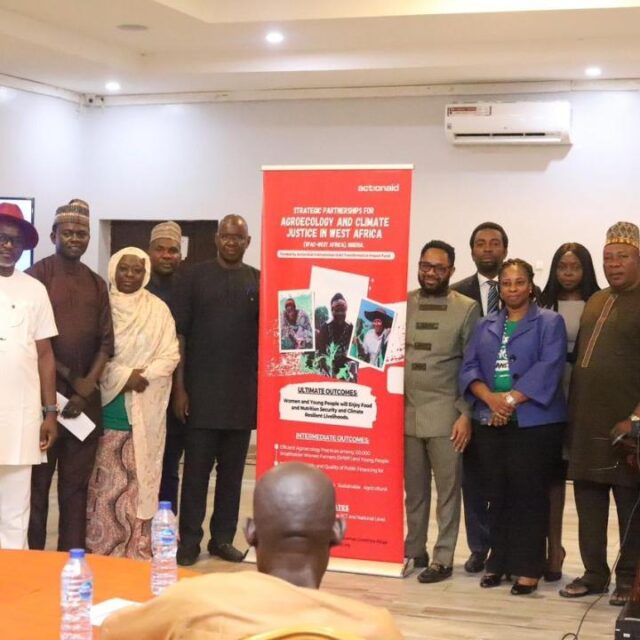
In an official communique released via their Twitter page on June 7th, 2023, ActionAid Nigeria announced the launch of the SPAC-West Africa project. The initiative was unveiled during the Stakeholders Meeting on Agroecology and Climate Justice held at Hawthorn Suites in Abuja from June 5th to 6th, 2023 organized in collaboration with the Federal Ministry of Agriculture and Rural Development (FMARD). The project seeks to scale up agroecology as a resilient and sustainable nature-based solution to counter the impacts of climate change on food production and nutrition security in Nigeria.
The SPAC-West Africa project, funded by ActionAid International (AAI) through its Transformative Impact Fund (TIF), will be implemented in Liberia, Nigeria, and Senegal. Additionally, it will involve regional engagement with stakeholders in collaboration with the ECOWAS Commission. While ActionAid Nigeria is responsible for implementing the project within Nigeria, it will also coordinate engagement activities across the ECOWAS region and the continent.
The project in Nigeria aims to improve food and nutrition security while enhancing the agroecological skills of 120,000 Smallholder Women Farmers (SHWF) and Young People. It will facilitate access to early maturing seeds, seedlings, livestock, and poultry, thereby supporting agroecological practices, the preservation of indigenous seeds, and agrobiodiversity to increase farm yields. Through the implementation of agroecology budget monitoring, tracking, and advocacy, rightsholders will benefit from increased budget allocations and investments in agriculture. Moreover, 26 model agroecological farms will be established and expanded by SHWF to encourage the adoption of agroecological practices.
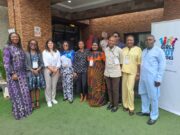
The two-day Stakeholders Meeting witnessed the participation of 136 attendees, including representatives from the House of Representatives Committee on Agricultural Production and Services, the Federal Ministry of Agriculture and Rural Development (FMARD), the Ecological Project Office, and the Agricultural Development Programme (ADP) Managers from the 36 states and the Federal Capital Territory (FCT). Notable organizations present at the event included the Small-Scale Women Farmers Organization in Nigeria (SWOFON), Be The Help Foundation, Heinrich Boll Stiftung Foundation, ECOWAS Commission, Nigeria Agribusiness Group, United States African Development Foundation (USADF), All Farmers Association of Nigeria (AFAN), The Nigerian Association of Chambers of Commerce, Industry, Mines, and Agriculture (NACCIMA), as well as representatives from the media, academia, research institutions, and various Civil Society Organizations (CSOs).
The launch of the SPAC-West Africa project marks a significant step forward in promoting sustainable agriculture, climate resilience, and food security in Nigeria. By empowering Smallholder Women Farmers (SHWF) and Young People with agroecological skills and resources, ActionAid Nigeria and FMARD are paving the way for a more inclusive and resilient agricultural sector.
During the launch, the group made 10 key recommendations and calls to action to the relevant state and non-state actors:
”1. We call on Federal and State Executives, National and State Houses of Assembly to scale up agroecology and extension services yearly budget, and ensure timely consideration, passage, and total budget releases as a strategic approach to increase food production, reduce hunger and poverty and achieve the CAADP Commitment to Enhancing Resilience of Livelihoods & Production Systems to Climate Variability and Other Shocks.
2. The Ecological Project Office should support the scale-up of agroecology across communities in Nigeria towards climate change mitigation and adaptation.
3. As approved by the 44th National Council on Agriculture and Rural Development (NCARD); the three tiers of government should commit 10% of their annual budget to the agriculture sector to meet the 10% Maputo/Malabo Declaration required to support at least 6% growth rate for the sector as postulated in the CAADP framework. There should be political will to allocate at least 10% of annual budgets and actuals of revenues to the agriculture sector with appropriate budget lines so that Nigeria will be on track in the next Biennial Reporting to the African Union Heads of States and Government in line with the Malabo Declaration and Commitments of 2014.
4. Federal and State governments should allocate more public investments in agriculture to address the strategic areas of investments that would increase the agricultural GDP to at least 6%. These strategic areas of investments include Extension Services, Access to Credit, Women in Agriculture, Youth in Agriculture, Appropriate Labour-Saving Technologies, Inputs, Post-Harvest Losses Reduction Supports (processing facilities, storage facilities, trainings, market access, etc.), Climate Resilient Sustainable Agriculture (CRSA)/Agroecology, Research and Development, Monitoring and Evaluation, as well as Coordination.
5. Government should strengthen Extension Services with mobility, incentives, and resources for field visits and employ more extension agents, especially women and youths.
6. The GES should be re-introduced, and the budget should be increased to address the inputs gaps experienced by smallholder farmers, especially women and young people, and to provide access to early maturing seeds, seedlings, livestock, fisheries and aquaculture, and poultry, thus supporting agroecological practices, indigenous seeds, and agrobiodiversity preservation for increased farm yields.
7. The National Agricultural Development Fund should have a major component in supporting and scaling up agroecology across communities in Nigeria.
8. FMARD should begin to develop pesticide policies and legislation that ensure that the most toxic pesticides are prohibited, and phased out in Nigeria, and a significant shift made towards sustainable farm systems like agroecology. To achieve this, the government needs to develop a safe sustainable food strategy that reduces the use of highly toxic synthetic chemical pesticides by 50% by 2030; 25% by 2040, a maximum of 5% by 2050, and strong support to be given to farmers in their transition towards agroecology.
9. The private sector through Public Private Partnerships (PPPs) that benefit smallholder farmers especially women and young people should promote agroecology and play a robust role in facilitating market access for agroecologically produced agriculture produce in Nigeria.
10. Development Partners and Donors should increase their fundings and programmes on agroecology and climate justice in Nigeria.” the report reads
For more information, please contact:
ActionAid Nigeria and Federal Ministry of Agriculture and Rural Development (FMARD)
















 “Fuel subsidy is gone,”